The rapid evolution of nanotechnology has transformed modern healthcare, particularly in drug delivery and vaccine development. At the heart of this transformation lies microfluidic technology an advanced manufacturing platform that offers unmatched precision, scalability, and reproducibility. As the demand for sophisticated nanoformulations continues to grow, microfluidics is emerging as a critical enabler, redefining how nanoparticles are designed, produced, and scaled for real-world applications.
In recent years, the convergence of nanotechnology and microfluidics has emerged as one of the most promising advancements in the synthesis of nanocarriers for drug delivery and vaccine development. This powerful integration is transforming healthcare and biopharmaceutical manufacturing by offering precise, reproducible, and scalable nanoformulation platforms. Microfluidic systems are now being widely recognized for their ability to bridge the gap between laboratory research and industrial-scale production.
The Need for Advanced Nanoparticle Manufacturing:
Nano-delivery systems have revolutionized the biopharmaceutical sector by enabling targeted, controlled, and efficient delivery of therapeutic agents. Advanced nano-systems such as lipid nanoparticles (LNPs), liposomes, and polymeric nanoparticles play a pivotal role in drug delivery, gene therapy, and vaccine development. The clinical success of RNA-based vaccines and rapid progress in cell and gene therapies have highlighted the urgent need for robust manufacturing technologies capable of producing uniform and scalable nanoformulations with high reproducibility and quality.
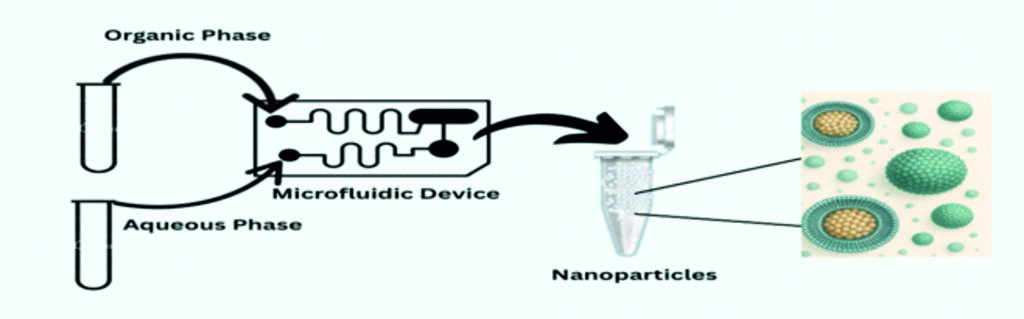
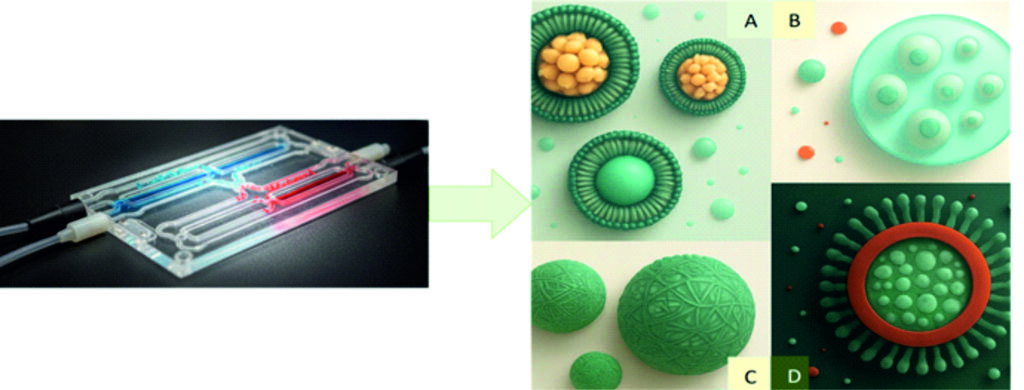
Microfluidics: Precise synthesis of NPs at microscale:
Microfluidics involves the manipulation of fluids within micrometre-scale channels, allowing unparalleled control over formulation parameters such as flow rate, mixing ratio, and reaction time. These precisely controlled environments directly influence nanoparticle size, polydispersity, and encapsulation efficiency. Microfluidic platforms support the fabrication of a wide range of nanomaterials, including lipid nanoparticles, liposomes, emulsions, and polymeric nanoparticles. This versatility positions microfluidics as a universal and future-ready manufacturing platform for nanomedicine.
Engineering and Manufacturing Advantages:
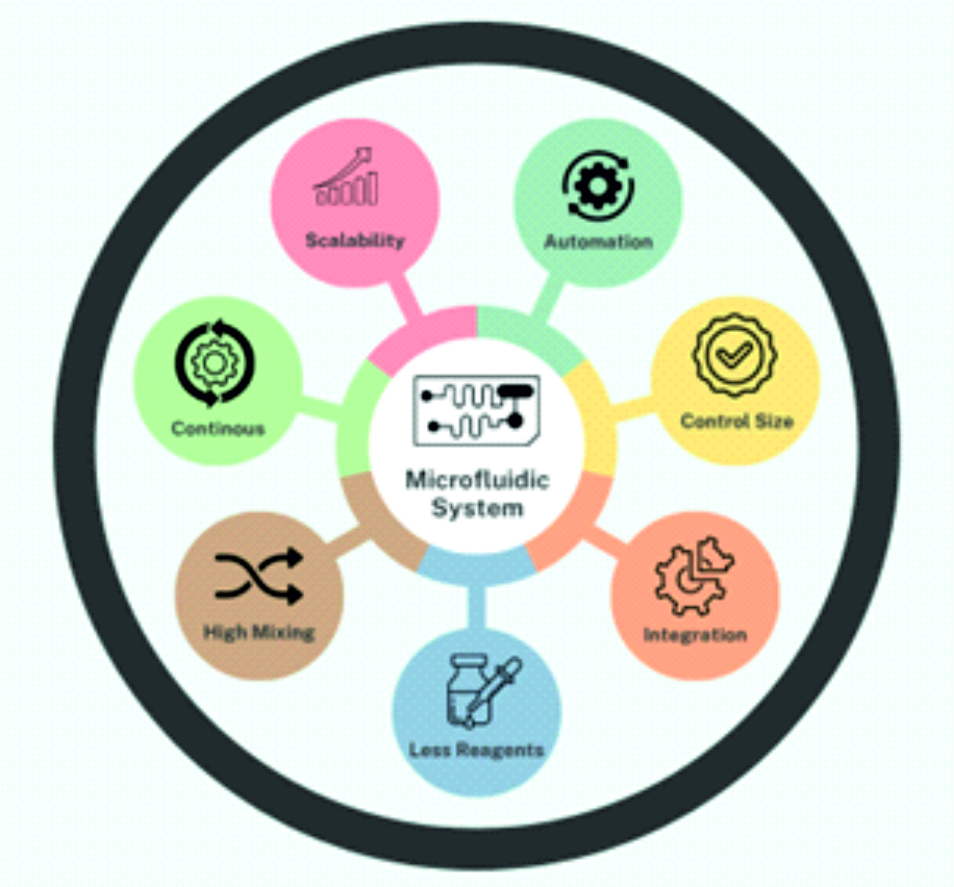
From an engineering perspective, microfluidic systems offer superior control over nanoparticle uniformity compared to conventional bulk methods. Scalability is achieved by increasing chip throughput without compromising quality. Automation, real-time monitoring, and precise process control enhance reproducibility and efficiency, while reduced reagent consumption and minimal waste promote sustainable manufacturing practices.
Future Outlook:Toward Translational Manufacturing:
With the growing global demand for nanoparticle-based therapeutics, the future lies in fully automated microfluidic manufacturing platforms. In India, Amar Biosystems Pvt. Ltd. has pioneered the launch of Nanomake-L, a fully automated microfluidic platform aligned with the Make-in-India initiative. Key features include a reusable chip, wide operating flow-rate range, configurable precursor pumps, automated washing programs, and flexible sample collection. As the field evolves, microfluidics is poised to become a global manufacturing standard for nanoformulations.
For more info :
www.amipolymer.com