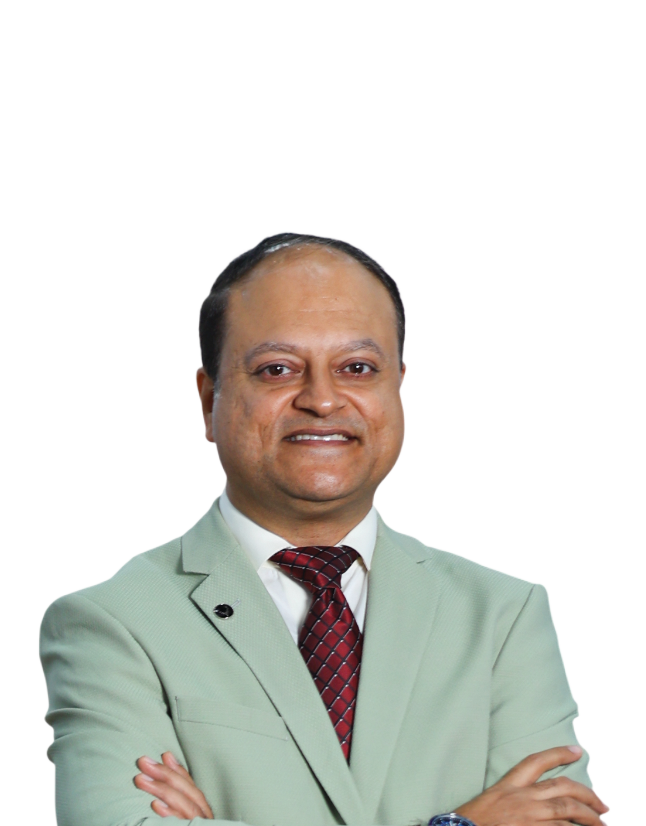
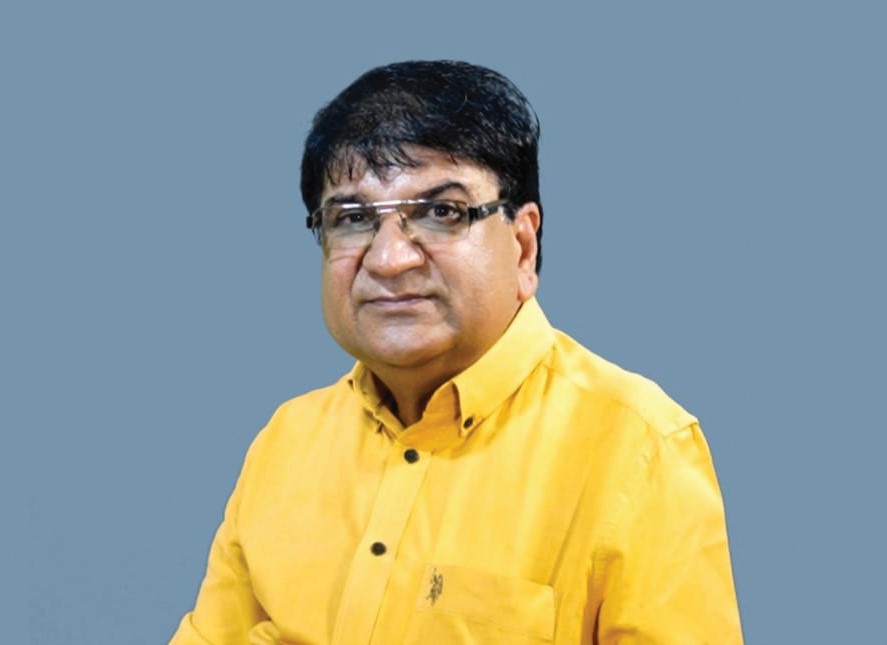
Dr.D.P. Sharma
Professor, Scientist and Advisor, Digital Diplomacy
As Large Language Models (LLMs) reshape how the world accesses and processes information, the role of institutions and thought leaders committed to preserving human wisdom has never been more critical. Under the intellectual guidance of Dr. D. P. Sharma Professor, Advisor in Digital Diplomacy associated with the United Nations, and Technology Analyst this vision takes form as a company profile rooted in balance: embracing advanced technology while safeguarding the depth, ethics, and lived experience that define human knowledge. In an era driven by speed and automation, the organization stands for reflection, responsibility, and intellectual discipline.
The rise of Large Language Models marks a defining moment in the evolution of knowledge systems. With unprecedented computational power, these models synthesize vast repositories of text, delivering instant answers, summaries, and interpretations. While this represents a technological triumph, Dr. D. P. Sharma’s work and advisory philosophy emphasize that access alone does not equate to understanding. The organization he represents positions itself at the intersection of artificial intelligence and human-centered learning, advocating for technology that enhances not replaces contemplation, judgment, and wisdom.
At the heart of this profile lies a clear belief: books remain foundational to intellectual maturity. Whether in print or digital form, books are not merely containers of information but expressions of human consciousness. They reflect struggle, creativity, ethical responsibility, and lived experience qualities that no algorithm can authentically generate. The company’s thought leadership underscores that while LLMs can predict language patterns, they cannot replicate the emotional depth or moral accountability embedded in human-authored works.
In today’s prompt-driven culture, knowledge risks becoming transactional optimized for efficiency but stripped of context. Dr. D. P. Sharma’s perspective challenges this trend by promoting intellectual discipline as a strategic asset. Deep reading, sustained attention, and engagement with complex arguments are essential skills for academia, diplomacy, and policy-making. The organization actively supports frameworks where AI tools assist research and learning, yet remain subordinate to human reasoning and ethical oversight.
From a digital diplomacy standpoint, this philosophy carries global significance. In international relations, technology policy, and governance, decisions demand more than rapid data synthesis; they require empathy, historical awareness, and ethical foresight. By integrating AI responsibly, the organization advises institutions to use LLMs as accelerators of access guiding users toward credible sources, books, and scholarly work rather than as arbiters of truth.
The company profile also reflects a forward-looking approach to publishing and knowledge dissemination. Digital books are seen as evolving platforms, enriched with interactivity, annotations, and cross-disciplinary links. Print books, meanwhile, retain their symbolic and practical value as spaces for uninterrupted reflection in a hyper-connected world. Together, they form a resilient ecosystem of learning that technology can support but not supplant.
Ultimately, the organization’s mission is to preserve human wisdom in an age of algorithms. The true challenge of the LLM era is not technological disruption, but the risk of undervaluing human experience, instinct, and sentiment. By championing books, ethical AI, and reflective learning, Dr. D. P. Sharma’s vision positions the company as a custodian of depth in a world increasingly defined by speed.