As India accelerates toward its next phase of urban and industrial growth, the construction sector faces an unprecedented challenge: delivering scale, speed, and sustainability at the same time. From mass housing and logistics hubs to energy-intensive data centres, the demand for faster, lower-carbon, and more reliable construction has never been greater. Enter 3VIMA Pty Ltd, an Australian deep-tech construction company redefining how engineers design and build through large-scale 3D concrete printing (3DCP), robotics, and AI-driven automation.
For decades, construction productivity has lagged behind other industries, constrained by labour-intensive processes, material waste, fragmented supply chains, and limited digital integration. Engineers are now expected to overcome these challenges while also responding to climate resilience, decarbonisation targets, and compressed project schedules. Conventional construction methods, built around shuttering, manual placement, and sequential trades, are increasingly misaligned with these demands.

Dr. Jai Ranganathan,
CEO & Founder - 3VIMA Pty Ltd
3VIMA’s approach reframes construction as a digitally controlled, automated manufacturing process. By leveraging large-format 3D concrete printing systems, the company enables structural elements to be printed directly from digital design models, reducing variability and human dependency while increasing speed and precision. This shift has significant implications for how engineers plan, design, and execute projects at scale.
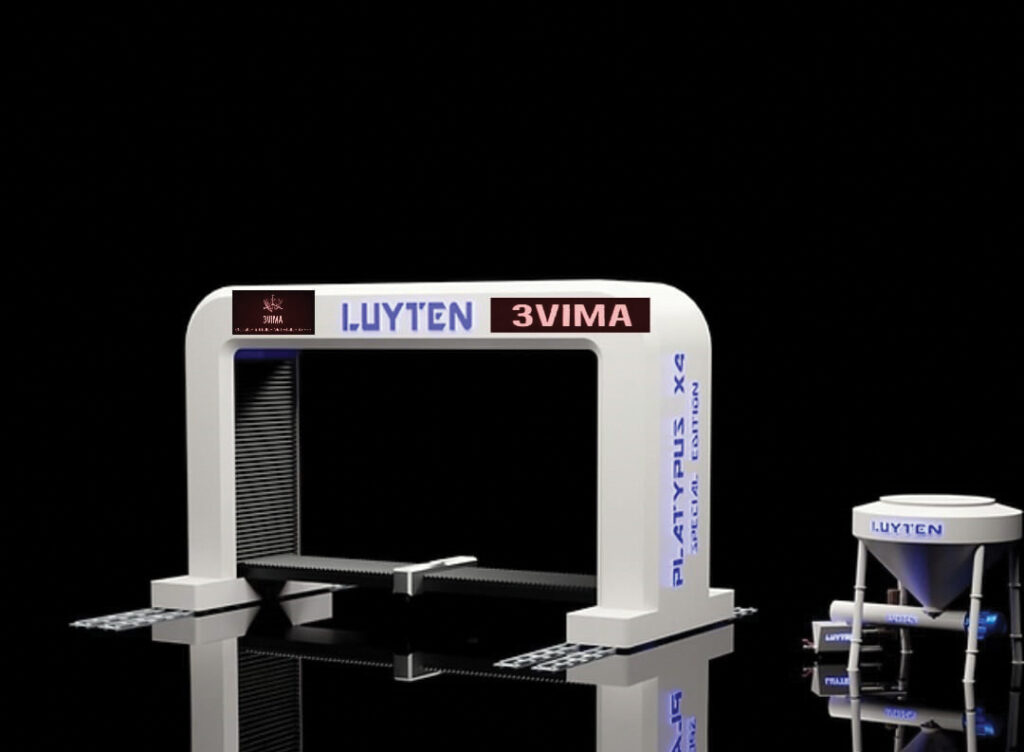
Central to 3VIMA’s technology stack are its gantry-based printers, such as the Platypus X4 Special Edition, engineered for deployment on live construction sites. These systems can be assembled rapidly, span typical building footprints, and operate at high print speeds without compromising dimensional accuracy. Multi-axis motion allows the creation of complex wall geometries, curved forms, shear walls, and integrated architectural features capabilities that are difficult or costly to achieve with traditional formwork-based methods.
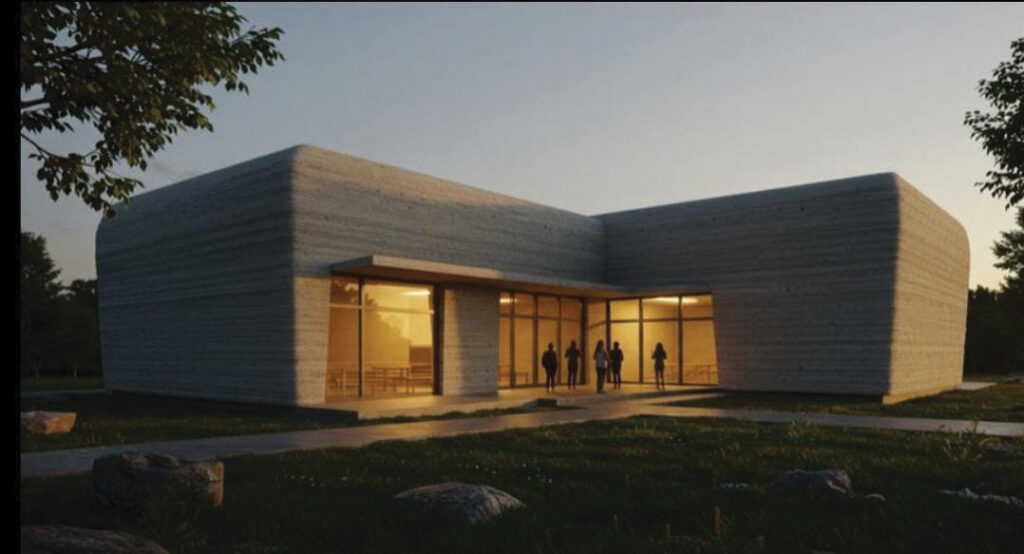
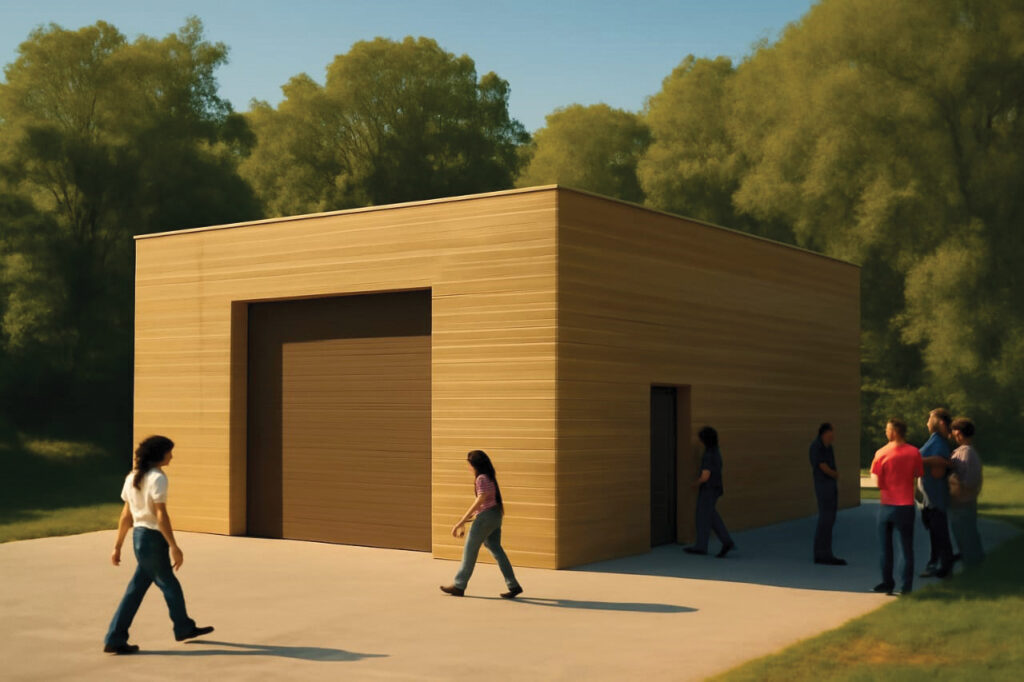
Equally important is the integration of AI-driven sensing and closed-loop control. Real-time monitoring of extrusion rates, layer geometry, and material behaviour ensures consistent layer bonding and structural reliability. For engineers, this machine-controlled repeatability translates into improved predictability of outcomes, reduced rework, and tighter alignment between design intent and on-site execution.
Material science plays a critical role in making 3DCP viable at scale. 3VIMA has developed high-performance printable concrete mixes that balance pumpability, buildability, early-age strength, and long-term durability. These formulations are informed by global research into 3DCP rheology and can be adapted to local raw materials, climatic conditions, and regulatory frameworks. In the Indian context, this opens opportunities for collaboration with domestic cement manufacturers, research institutions, and standards bodies to align printed construction with IS codes and durability requirements.
From a project delivery perspective, the value proposition of 3D concrete printing is anchored in speed, cost efficiency, and carbon reduction. International case studies demonstrate that structural shells for low-rise buildings can be completed in a matter of days, with 100–130 square metre homes printed in under 60 machine hours. This compression of timelines enables earlier fit-outs, faster financing closure, and quicker revenue realisation advantages that are particularly relevant for large housing schemes and industrial developments.
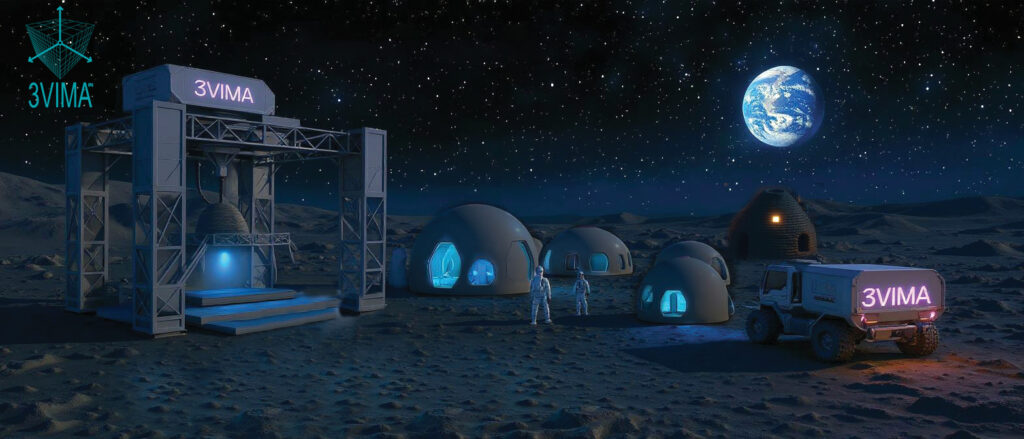
Cost efficiencies arise from multiple sources: elimination of formwork, reduced on-site labour, lower material waste, and simplified logistics. Depending on project scale and complexity, structural cost reductions of 15–35% are achievable. Waste reduction of up to 95% further strengthens the economic and environmental case, especially on constrained urban sites.
Sustainability considerations are increasingly central to engineering decisions, and here 3DCP offers a clear pathway forward. Optimised wall geometries, reduced cement usage, and material-efficient designs can significantly lower embodied carbon. Studies indicate that embodied carbon reductions of up to 50% are possible compared with conventional concrete construction. For projects targeting green building certifications or aligning with national climate commitments, these gains position 3DCP as a strategic tool rather than a niche technology.
3VIMA’s solutions are particularly suited to applications where speed, repetition, and performance are critical affordable housing, logistics and industrial infrastructure, data centres, and community buildings. In each case, digital design libraries and modular strategies allow engineers to standardise elements while retaining flexibility for site-specific adaptation.
Under the leadership of Dr. Jai Ranganathan, Founder and CEO, 3VIMA emphasises risk-managed adoption, regulatory compliance, and long-term asset performance. This pragmatic, engineering-led vision treats 3D concrete printing not as an experimental novelty, but as an evolving construction methodology ready for integration into mainstream practice.
For more Info:
3vima.construction