As industries across the globe face increasingly stringent environmental regulations, Continuous Emission Monitoring Systems (CEMS) have become essential for ensuring accurate and transparent emissions reporting. However, selecting the right CEMS involves much more than comparing technical specifications or pricing. The true measure of a dependable monitoring solution lies in its compliance with internationally recognized standards, particularly QAL-1 Certification.
What Makes QAL-1 Different?
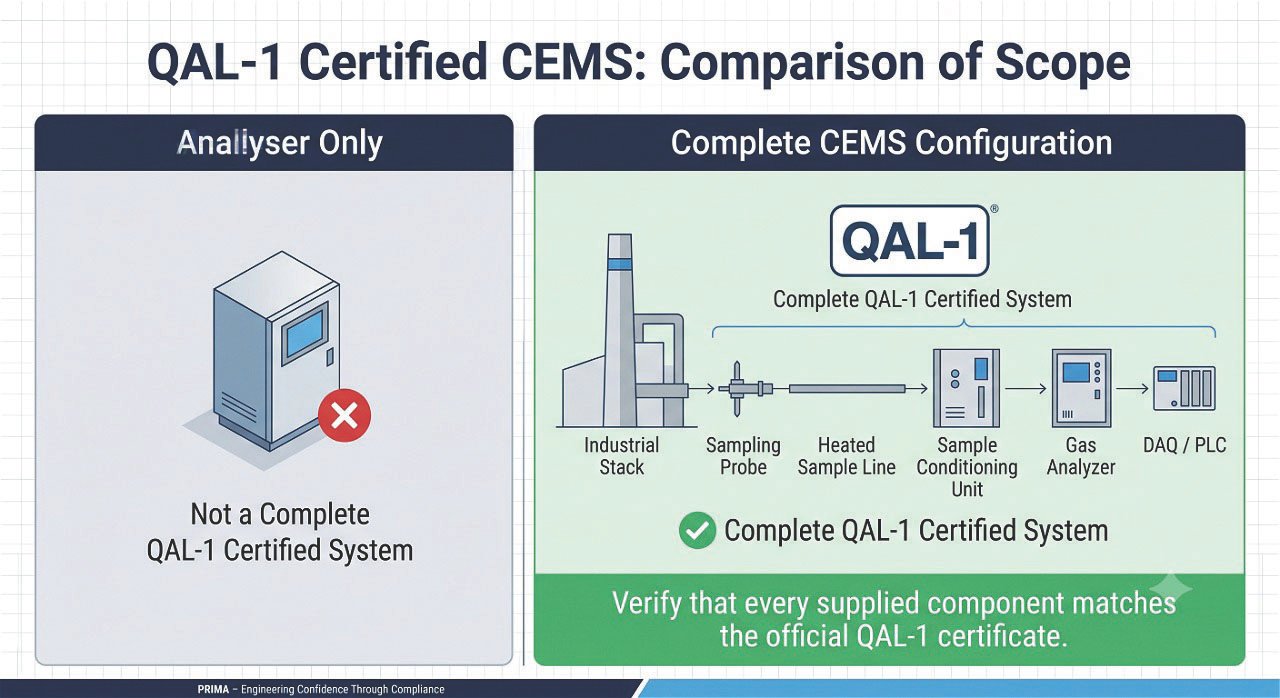
Quality Assurance Level 1 (QAL-1) is the highest level of pre-installation certification under the European EN 14181 quality assurance framework for Automated Measuring Systems (AMS). Rather than certifying an individual analyzer, QAL-1 validates the complete measurement system including sampling probes, heated sample lines, conditioning units, analyzers, electronics, software, and data acquisition systems.
To achieve certification, the entire system must successfully undergo independent factory audits, laboratory performance evaluations, extended field trials, and comprehensive quality assessments. This ensures that the equipment consistently delivers reliable, repeatable, and legally defensible measurement data under real operating conditions.
Beyond the Analyzer: The Complete System Matters
One of the most common misconceptions in the emissions monitoring industry is the belief that purchasing a “QAL-1 certified analyzer” automatically guarantees compliance. In reality, QAL-1 certification applies only to the complete Automated Measuring System.
Replacing certified sampling components, conditioning units, or other system elements with non-certified alternatives invalidates the certification. This makes system integration and component traceability critical considerations during procurement.
Key Factors Every Buyer Should Verify
Before investing in a Continuous Emission Monitoring System, industrial facilities should carefully verify the authenticity of the certification. Buyers should request official certification documents, confirm that all system components match the approved configuration, validate pollutant measurement ranges, and ensure the supplier provides ongoing lifecycle support, including calibration, maintenance, and regulatory compliance services.
These verification steps help protect facilities from compliance risks while ensuring long-term operational reliability.
Engineered for Performance and Compliance
A truly compliant CEMS is designed to perform reliably in demanding industrial environments. From precision sampling probes and heated transport lines to advanced gas analyzers and intelligent data acquisition systems, every component contributes to measurement accuracy and operational stability.
Such integrated engineering minimizes maintenance requirements, reduces unexpected downtime, and delivers dependable emissions data throughout the system’s lifecycle.
For more Info :
www.primaequipment.com