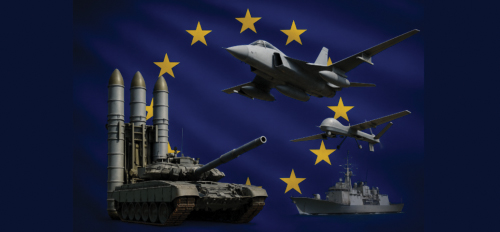
The European foundry industry is undergoing a significant transformation as it faces mounting pressures from economic, geopolitical, and regulatory challenges. With traditional markets—particularly automotive—experiencing substantial decline due to high energy costs, stringent EU regulations, and shifting global supply chains, foundries across Europe are seeking new avenues for growth and stability. One of the most promising areas emerging is the defence and aerospace sector, driven by heightened geopolitical tensions and increased government investments.
Across several EU nations, substantial funding is now being directed toward defence modernisation and rearmament programs. For many foundries, this shift represents a critical opportunity to diversify and realign production strategies. European manufacturers are being urged to act swiftly, adapting their capabilities to meet the rising demand for highly specialised cast components essential for security, mobility, and defence infrastructure.
Key Areas of Demand for Cast Products Steel Casting – Very High Demand Steel casting remains indispensable in heavy military applications. Components such as armoured vehicle road wheels, gear housings, drive wheels, gun barrels, breech blocks, and naval structural elements rely heavily on steel’s exceptional strength, wear resistance, and weld ability. These properties make steel castings vital for tanks, artillery systems, submarines, and high-impact defence machinery.
Investment Casting / Precision Casting – High Demand In aerospace and advanced weapon systems, precision casting is increasingly critical. Turbine blades for aircraft and helicopters, missile and drone components, and intricate housings for electronic and optical systems benefit from the outstanding dimensional accuracy and heat-resistant performance of precision cast superalloys. As military drones, guided weapons, and stealth systems advance, the demand for such components continues to accelerate. Cast Iron – Medium to High Demand Cast iron remains essential in ground-based defence vehicles. Engine blocks, brake assemblies, gear housings, steering knuckles, and counterweights for armoured transport vehicles depend on iron casting’s durability, cost efficiency, and vibration damping properties. This makes it a reliable material for heavy-duty operational environments.
Light Metal Casting (Aluminium, Magnesium, Titanium) – Strong and Rising Demand In aerospace and modern lightweight vehicle platforms, aluminium, magnesium, and titanium castings play an increasingly prominent role. From aircraft structures and drone components to housings for radar and advanced weapon systems, light metal castings offer high strength to-weight ratios, corrosion resistance, and enhanced fuel efficiency—qualities essential for next-generation defence technologies.
Casting Technologies: Essential to Europe’s Defence Readiness The industry’s role is clear: without advanced casting capabilities, critical defence and security systems would not be feasible.
- Steel casting underpins heavy armour, shipbuilding, and artillery.
- Precision casting ensuresthe reliability of aerospace engines and missile systems.
- Iron casting supports engines, undercarriages, and logistics fleets.
- Light metal casting drives the evolution of modern aircraft, drones, and naval platforms.
As global uncertainties intensify, European foundries are being urged to re-evaluate their technological direction and identify new value streams aligned with national defence priorities. With targeted adaptation, strategic investment, and proactive positioning, Europe’s foundry sector can reinforce both industrial resilience and continental security.
For more information :
www.gifa.com