As environmental regulations become more data-driven, industries must do more than control emissions—they must prove their performance with accurate, reliable and traceable data. Continuous Emission Monitoring Systems (CEMS), also known as Automated Measuring Systems (AMS), play a key role in this process. But installing a CEMS is only the first step. Its real value depends on how reliably the complete system measures, validates and reports emission data under actual operating conditions.
A reliable CEMS should be viewed as a complete measurement system rather than simply an analyser installed at a stack. It includes the sampling probe, heated sample line, gas conditioning system, analyser, Data Acquisition and Management System (DAMS), software and related components. The performance of each element can directly affect the quality of the final emission data.
Even an advanced analyser cannot deliver dependable results if sampling is unsuitable, condensation occurs, contaminants enter the system, sample gases are lost or the system is incorrectly configured. Proper system engineering, integration, commissioning and validation are therefore essential to establish confidence in reported emissions.
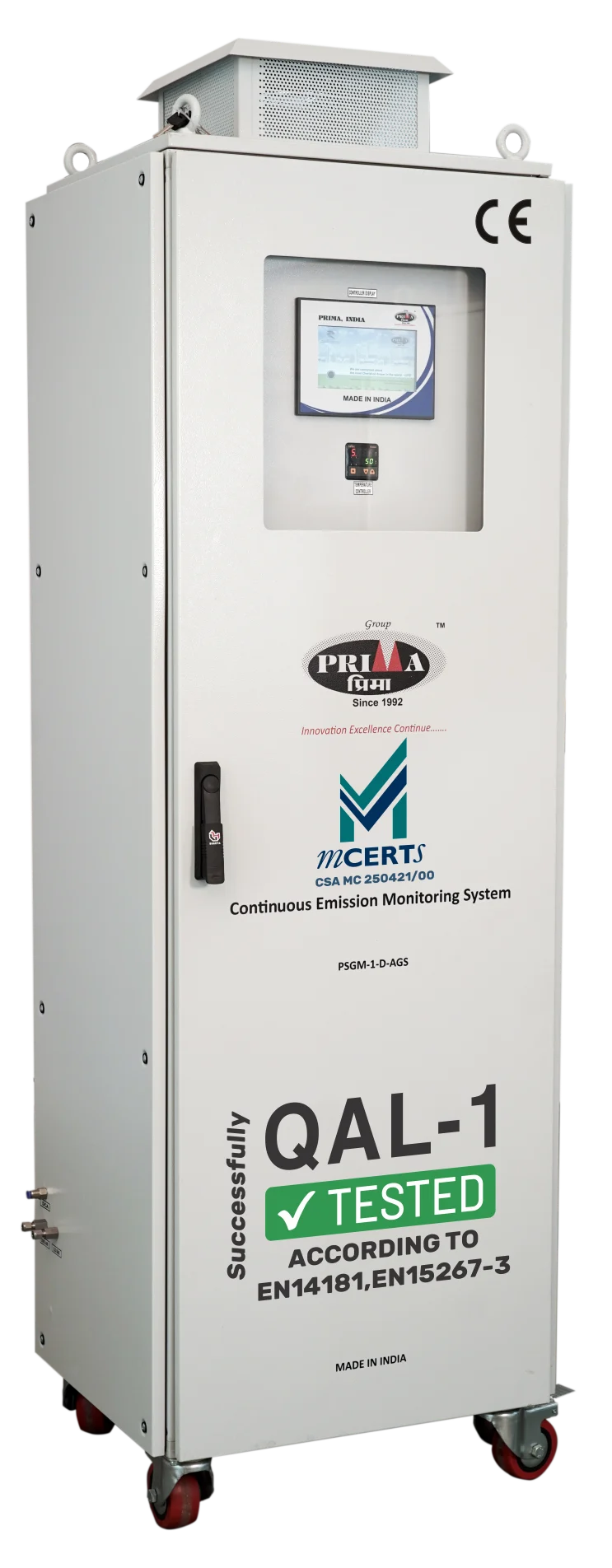
The European quality-assurance framework under EN 14181, together with EN 15267, provides a structured approach for maintaining the performance of Automated Measuring Systems. QAL-1 establishes the suitability and certified performance of the measuring equipment through defined performance tests. Parameters such as repeatability, response time, zero and span drift, temperature influence and cross-sensitivity are assessed.
Once installed, QAL-2 establishes the calibration function under actual plant conditions. This is critical because operating conditions at an industrial facility may differ considerably from laboratory or certification conditions.
Quality assurance must continue throughout the operating life of the system. QAL-3 provides regular checks of analyser performance, while Annual Surveillance Testing (AST) verifies that the system continues to meet required performance levels. Depending on the applicable regulatory requirements, RATA/RRA and other field accuracy assessments can provide additional verification of CEMS performance.
These procedures do more than support regulatory compliance. They create a continuous chain of confidence from sampling and measurement to calibration, validation, data acquisition and reporting. Regular checks can also help identify analyser drift, contamination and sample-system problems at an early stage, allowing industries to plan maintenance and reduce unexpected downtime.
This approach makes “Compliance with Credibility” an important principle. Compliance is meaningful when the data behind it is technically sound, traceable and supported by systematic quality assurance.
For industries, the objective should therefore not simply be to “have a CEMS”, but to maintain a demonstrably reliable monitoring system. When certified technology is combined with sound engineering, QAL procedures, surveillance and field verification, emission data becomes a dependable foundation for environmental compliance and informed operational decisions.
Reliable measurement builds credible compliance. Credible compliance supports sustainable industry.
PRIMA Equipment, India, has been engaged in the design and development of pollution, safety and environmental monitoring technologies since 1992, supporting industries with measurement solutions focused on reliability, compliance and sustainability.
For More Info:
www.primaequipment.com