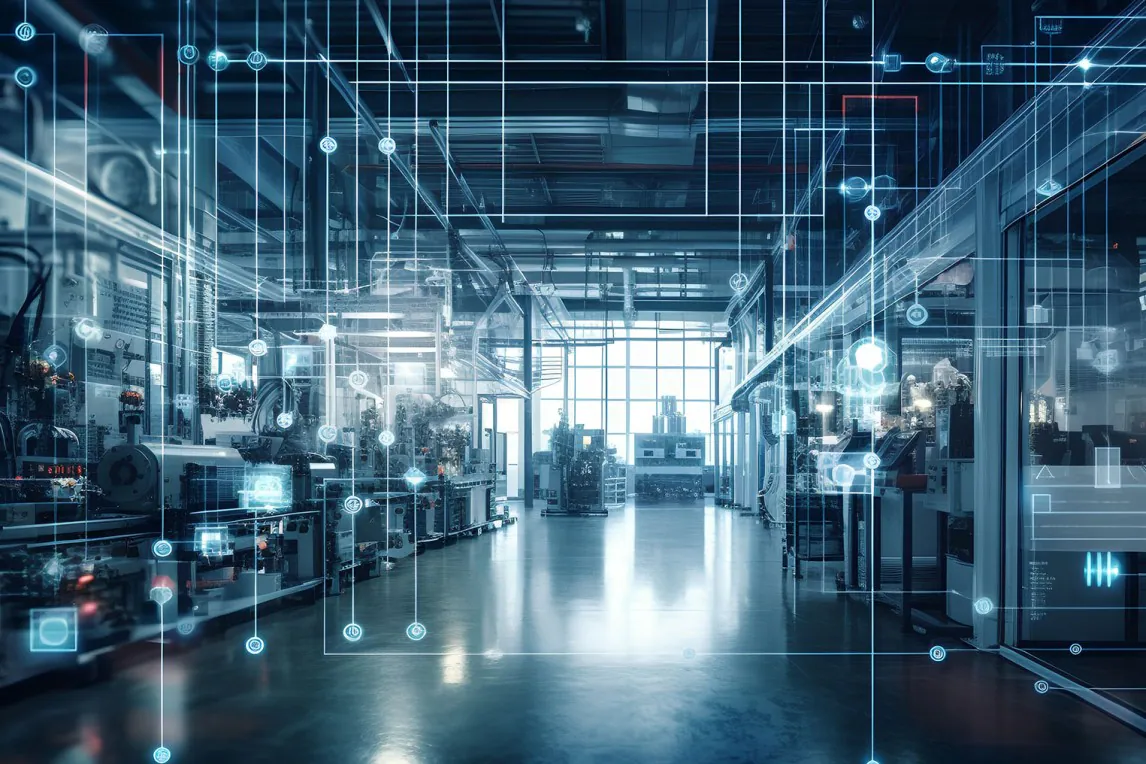
Artificial intelligence is rapidly changing the way data centers are designed and powered. As AI applications demand higher computing capacity, traditional power architectures are facing new challenges around efficiency, space, scalability and sudden changes in electricity demand. New power technologies, including solid-state transformers, are emerging as an important part of the solution.
The growth of AI is creating data centers with increasingly high power densities. AI training workloads can produce significant and rapid fluctuations in electricity demand, putting greater pressure on power infrastructure. Conventional systems often rely on multiple stages of AC-to-DC conversion, adding equipment, energy losses and space requirements. The industry is therefore looking for architectures that can deliver power more directly and efficiently.
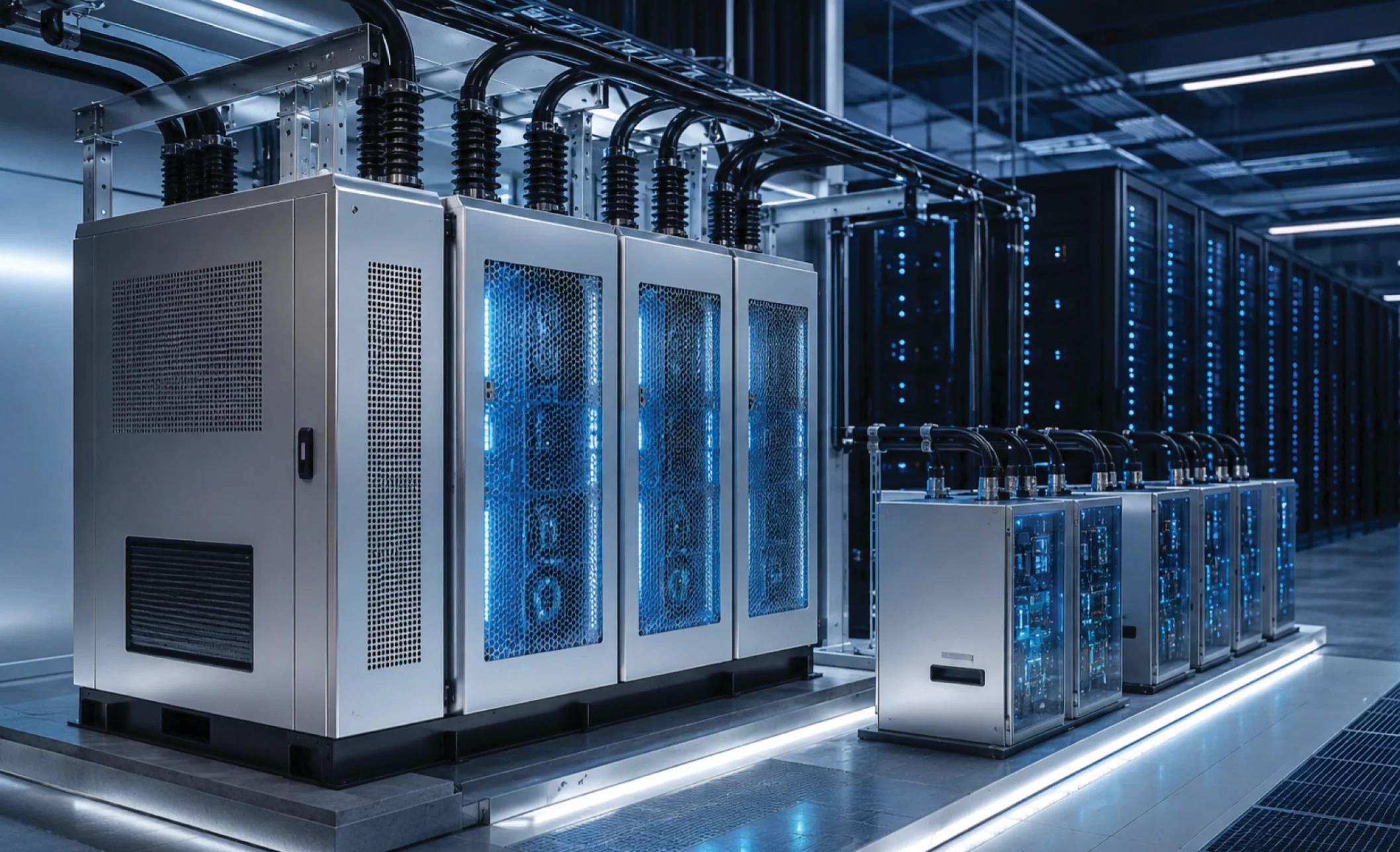
One technology attracting attention is the solid-state transformer (SST). Unlike conventional transformers, SSTs combine power electronics with transformer functionality, enabling direct conversion from medium-voltage AC electricity to DC power closer to the computing equipment. This can simplify the power chain and reduce the physical footprint of the infrastructure.
A major advantage is the SST’s ability to respond to changing loads within milliseconds. This rapid response is particularly relevant to AI workloads, where computing demand can change sharply during intensive training and processing operations. By helping manage these fluctuations, the technology can contribute to improved power stability, reduced downtime risks and more efficient operation.
The development is being supported through collaboration between Siemens and Reinhausen, combining expertise in power electronics, grid integration, voltage regulation, protection and digitalization. Their approach focuses on creating power systems that are modular, scalable and capable of supporting high-availability AI infrastructure.
The proposed architecture can operate at voltages of up to 36 kV, while its modular structure allows adaptation to lower-voltage grid connections. At the data-center level, the system is designed to provide 800-volt direct current (VDC) output, a voltage architecture expected to become increasingly relevant as AI computing infrastructure evolves.
The significance of this development extends beyond individual data centers. As AI adoption grows across manufacturing, engineering, healthcare, finance and other industries, reliable and efficient computing infrastructure will become increasingly important. Energy systems must evolve alongside processors, servers and networking technologies rather than remain a separate supporting layer.
The shift toward solid-state transformer technology reflects this broader change. Future data centers will need power systems that are not only reliable but also compact, flexible and capable of responding to highly dynamic workloads. By bringing advanced power conversion closer to the computing infrastructure, SST-based architectures could help create a more adaptable foundation for the next generation of AI.
For more info :
www.siemens.com