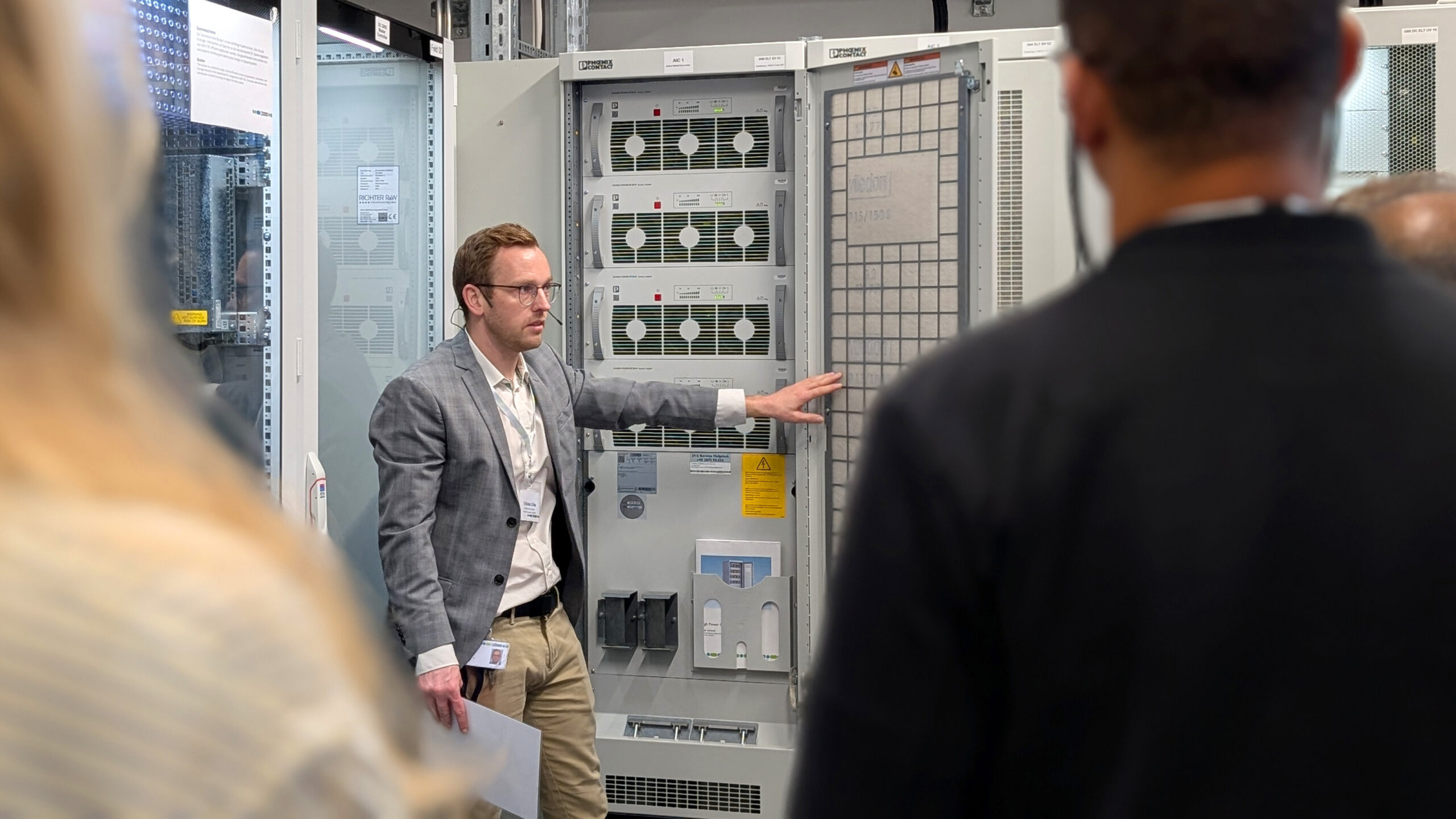
As industries worldwide search for more energy-efficient and sustainable power solutions, direct current (DC) technology is rapidly emerging as a game-changing innovation. Once overshadowed by alternating current (AC) systems, DC is now making a strong comeback in industrial applications, offering higher efficiency, better integration with renewable energy, and smarter energy management. At the center of this transformation is the development of industrial DC grids, which are set to redefine how factories consume and manage energy in the future.
The global push toward energy efficiency, sustainability, and smart manufacturing is driving industries to rethink traditional power distribution systems. For decades, alternating current (AC) has been the standard for industrial power systems. However, with the rise of renewable energy sources, battery storage systems, and digital manufacturing, direct current (DC) is becoming increasingly relevant in modern industrial infrastructure.
Industrial DC grids offer several major advantages over conventional AC systems. One of the most significant benefits is the reduction of energy conversion losses. In traditional AC systems, electricity often needs to be converted multiple times when used by machines, battery systems, and electronic equipment. Each conversion leads to energy loss. DC systems reduce these conversion steps, resulting in energy efficiency gains of approximately 8 to 12 percent in factory environments.

Another major advantage of DC grids is their ability to integrate renewable energy sources such as solar power directly into the system. Photovoltaic panels generate DC power naturally, and battery storage systems also operate on DC. By using a DC grid, factories can connect renewable energy sources and storage systems directly without multiple conversions, making the entire energy system more efficient and cost-effective.
Industrial DC systems also enable energy recuperation in automated industrial environments. For example, in moving systems such as robots, cranes, and automated warehouse systems, energy generated during braking can be fed back into the DC grid and reused. This not only saves energy but also reduces overall power consumption and operational costs.
Material savings are another important benefit. DC systems can reduce copper usage by up to 50 percent due to lower cable cross-section requirements. In addition, companies can save up to 25 percent on electronic components due to simplified system architecture. DC applications can also help avoid up to 80 percent of peak loads, which significantly reduces electricity costs and improves grid stability.
Despite these advantages, the large-scale implementation of industrial DC grids still faces challenges. These include the need for DC-compatible components, intelligent load management systems, and advanced grid control mechanisms to ensure safe and stable operations. However, ongoing technological developments and industry collaborations are rapidly addressing these challenges.
As industries move toward smart factories and sustainable energy systems, industrial DC grids are expected to play a major role in the future of manufacturing. By improving energy efficiency, reducing material costs, and enabling better integration of renewable energy, DC technology is not just an alternative to AC systems it is becoming the backbone of next-generation industrial energy systems.
The shift toward industrial DC infrastructure marks a significant step toward smarter, more sustainable, and highly efficient factories of the future.
For more info :
static.phoenixcontact.com