
Hannover, 22 September 2025
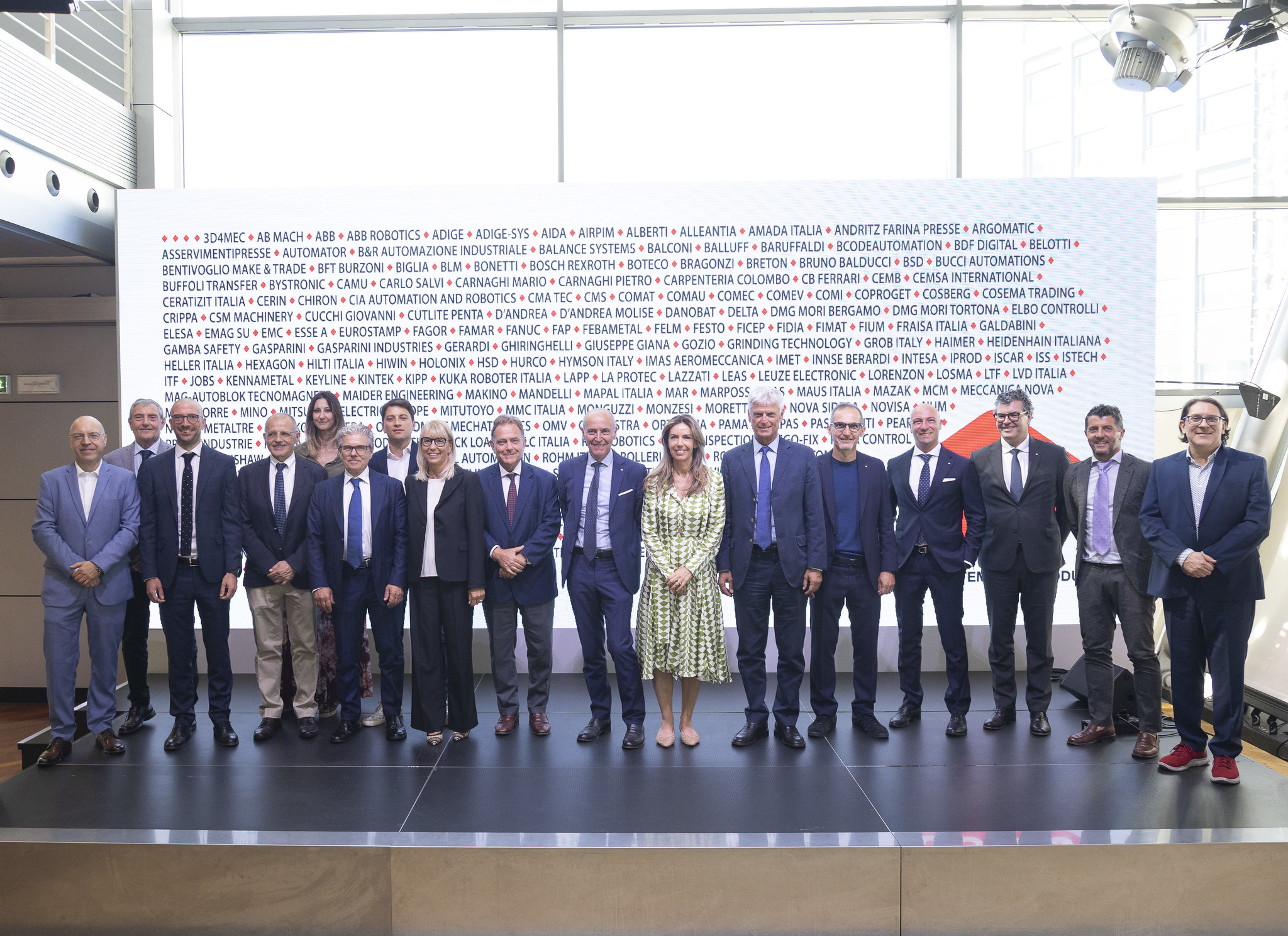
The global machine tool industry came together at EMO Hannover 2025, reaffirming its resilience and collective commitment to innovation amid an era of uncertainty. Associations from Europe, Japan, the United States, and India joined forces to highlight how collaboration, technology, and adaptability will define the next chapter of advanced manufacturing.
Despite challenges from geopolitical tensions, fluctuating trade environments, and economic slowdowns, EMO 2025 demonstrated that the machine tool sector continues to serve as the backbone of industrial progress enabling precision, productivity, and sustainability in modern manufacturing.
A Call for Global Cooperation and Innovation
Opening the CECIMO Press Conference, Mr François Duval, President of CECIMO, emphasized shared global ambitions across regions.
“Despite regional differences, we share common goals — creating a better business environment, expanding global markets, tackling skills shortages, and driving innovation through green and digital technologies,” he said, underscoring the industry’s united purpose.
CECIMO’s leadership highlighted the importance of joint initiatives and flexible strategies to overcome the headwinds facing manufacturers worldwide.
Europe’s Machine Tool Market: Adapting to Shifting Demand
Mr Marcus Burton, Chairman of CECIMO’s Economic Committee, presented a detailed outlook on the European machine tool (MT) market. He revealed that European MT production fell by 9.2% in 2024, dropping to €25.1 billion, with forecasts predicting another 8.6% decline in 2025. This contraction is expected to reduce Europe’s global MT market share from 34% to 31.5%.
Consumption across CECIMO member countries also declined by 16% in 2024, with a further 3.6% dip anticipated for 2025. However, the CECIMO8 order index offers cautious optimism — while Q2 2025 orders dropped 2% quarter-on-quarter, they were 6% higher year-on-year, suggesting improving international demand.


“Though recent results reflect a challenging landscape, the year ahead (2026) promises stronger performance as orders and consumption are set to rise,” said Mr. Burton.
Japan’s Industry Faces Market Correction but Shows Signs of Stability
Mr Kazuo Yuhara, President of the Japan Machine Tool Builders’ Association (JMTBA), shared insights on Japan’s mixed market signals. Domestic demand fell 7.4%, but overseas demand rose 3.4% in 2024. Production of metal cutting machine tools decreased 14.3%, totaling 901.3 billion yen, dipping below the ¥1 trillion mark for the first time in three years.
Exports declined 8.3%, and imports dropped 11.5%, reflecting the global trade slowdown. However, early 2025 data suggests partial recovery, with total orders and exports climbing year-on-year in the first half of the year.
“The initial forecast for 2025 projected strong order activity—and though conditions remain uncertain, Japan’s machine tool sector continues to demonstrate adaptability and technical excellence,” Mr. Yuhara affirmed.
USA: Strong Domestic Demand Driven by Strategic Investment
In contrast, Mr. Douglas K. Woods, President of the Association for Manufacturing Technology (AMT) in the U.S., reported robust performance in 2024, with domestic consumption growing by approximately 12% year-on-year.
This surge was fueled by demand from the aerospace, defense, and reshoring sectors, as well as foreign direct investment in American manufacturing. Looking toward 2026, AMT expects a stable environment, though with moderate caution.
“The softness we see now reflects prudent restraint in response to high financing costs, trade uncertainties, and geopolitical risks after years of sustained investment,” Mr Woods noted, adding that the U.S. market remains well-positioned for steady, long-term growth.


India: The Emerging Powerhouse in Machine Tools
Representing one of the world’s fastest-growing markets, Mr Jibak Dasgupta, Director General & CEO of the Indian Machine Tool Manufacturers’ Association (IMTMA), spotlighted India’s rapid expansion.
India’s GDP reached $4.19 trillion in FY 2024–25, achieving 6.5% real GDP growth, with projections maintaining this pace through 2029. The Indian machine tool industry recorded a total consumption of USD 3.7 billion, driven primarily by the automotive and auto components sector, which accounts for nearly 50% of total demand.
“India’s rise is not just about growth — it’s about capability and confidence,” said Mr Dasgupta. “With strong government support, expanding industrial capacity, and a surge in domestic and foreign investments, India presents unmatched opportunities for global collaboration.”
A Unified Vision for the Future
As EMO 2025 concluded, one message stood out clearly: the future of manufacturing depends on global unity and shared innovation. From Europe’s industrial recovery and Japan’s resilience to America’s manufacturing revival and India’s expansion, the machine tool industry remains the foundation of modern production.
Together, the world’s leading associations reaffirmed that adaptability, sustainability, and collaboration will be the guiding principles of the next manufacturing era.
EMO Hannover 2025 thus became more than an exhibition — it was a declaration of intent: to secure the future of machine tools in a changing global landscape.