As nations race toward carbon neutrality, the global construction industry is under pressure to reinvent itself. In Australia, innovative deep-tech company 3VIMA Pty Ltd is leading a transformative movement by developing low-carbon and cement-free concrete solutions powered by robotics, AI, and 3D printing technology paving the way for faster, greener, and smarter construction worldwide.
Concrete has long been the foundation of modern civilisation, shaping cities, infrastructure, and economies across the world. Yet behind its strength lies one of the construction industry’s greatest environmental challenges. The production of Ordinary Portland Cement (OPC), the primary ingredient used in traditional concrete, contributes nearly seven percent of global carbon dioxide emissions annually. As governments and industries accelerate efforts toward net-zero targets, the demand for sustainable alternatives has become more urgent than ever.
Emerging from Australia’s growing deep-tech ecosystem, 3VIMA Pty Ltd is positioning itself at the forefront of this transformation. Headquartered in Sydney, the company is pioneering advanced low-carbon and cement-free construction technologies that combine artificial intelligence, robotics, material science, and large-scale 3D concrete printing.
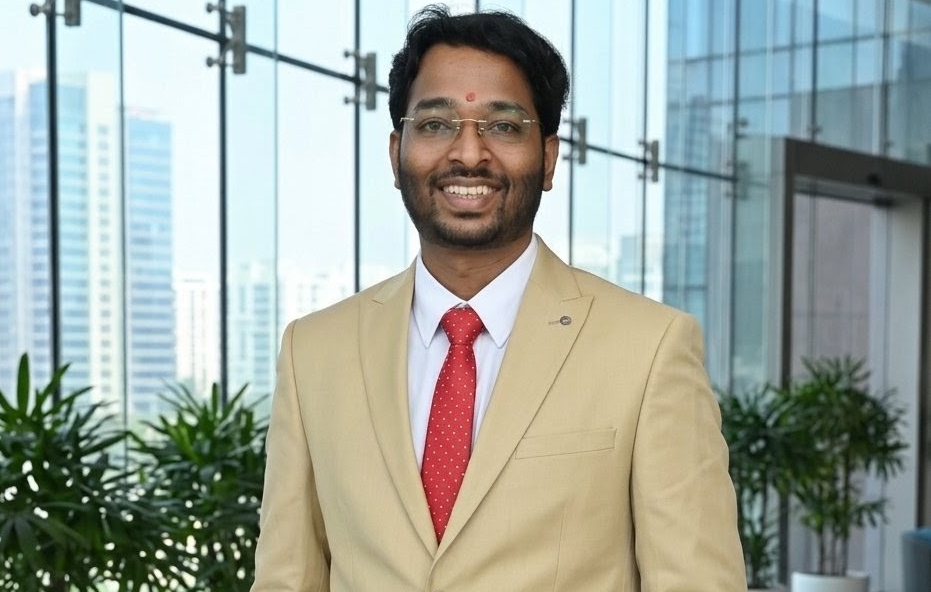
Founded by Dr. Jai Ranganathan, 3VIMA is driven by a vision to revolutionise how buildings are constructed while significantly reducing the environmental footprint of the built environment. Rather than relying solely on traditional building methods, the company is developing innovative concrete formulations that reduce or eliminate cement usage without compromising structural integrity or printability.
Central to 3VIMA’s research is the use of Supplementary Cementitious Materials (SCMs), industrial by-products such as fly ash, Ground Granulated Blast Furnace Slag (GGBS), silica fume, and agricultural waste residues. These materials partially replace cement in concrete mixes, resulting in dramatically lower carbon emissions. By integrating SCMs into its proprietary formulations, the company is creating high-performance low-carbon concrete suitable for advanced 3D printing applications.
Unlike conventional construction techniques, 3D concrete printing enables buildings to be created layer by layer using robotic extrusion systems controlled through digital design software. This process minimises material waste, improves construction precision, reduces labour dependency, and accelerates project timelines. Structures that traditionally take several months to build can potentially be completed within weeks using automated construction technology.
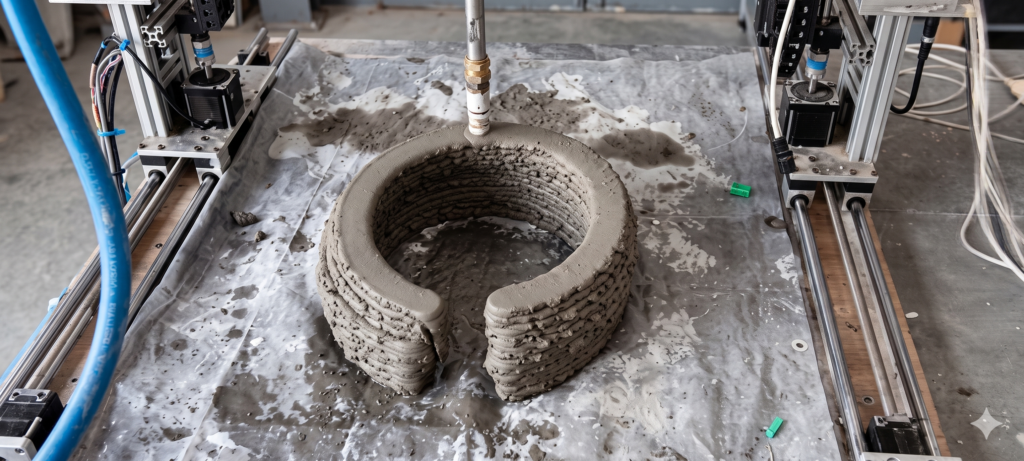
3VIMA has already achieved a major milestone by delivering what is recognised as the Southern Hemisphere’s first commercially built 3D-printed structure. The project demonstrated the practical viability of integrating sustainable material science with robotic construction systems at a commercial scale.
However, the company’s ambitions extend beyond low-carbon concrete. Its long-term research focus is centred on geopolymer concrete an advanced cement-free alternative considered one of the most promising developments in sustainable construction globally. Geopolymer binders are created through the chemical activation of industrial waste materials rather than through conventional cement production, enabling significant reductions in carbon emissions.
International studies suggest that geopolymer concrete can reduce emissions by up to 80 percent compared to traditional concrete systems. Yet despite its environmental advantages, widespread adoption has remained limited due to technical complexities surrounding workability, setting behaviour, and large-scale application.
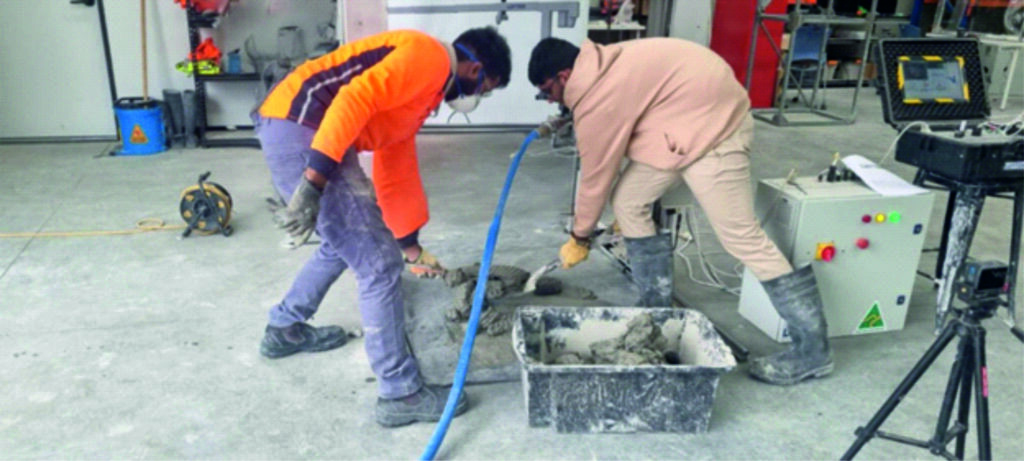
3VIMA’s research programme is tackling these challenges through extensive laboratory testing and formulation optimisation. By analysing extrusion behaviour, structural buildability, rheology, and long-term performance, the company aims to create geopolymer mixes capable of meeting demanding engineering standards while remaining commercially practical for 3D construction printing.
The company’s innovation is also closely linked to Australia’s growing housing challenges. Rising construction costs, labour shortages, and increasing demand for affordable housing are placing immense pressure on traditional building systems. Dr. Ranganathan believes advanced 3D printing technology can play a crucial role in addressing these issues by enabling faster, more efficient, and more sustainable housing delivery.
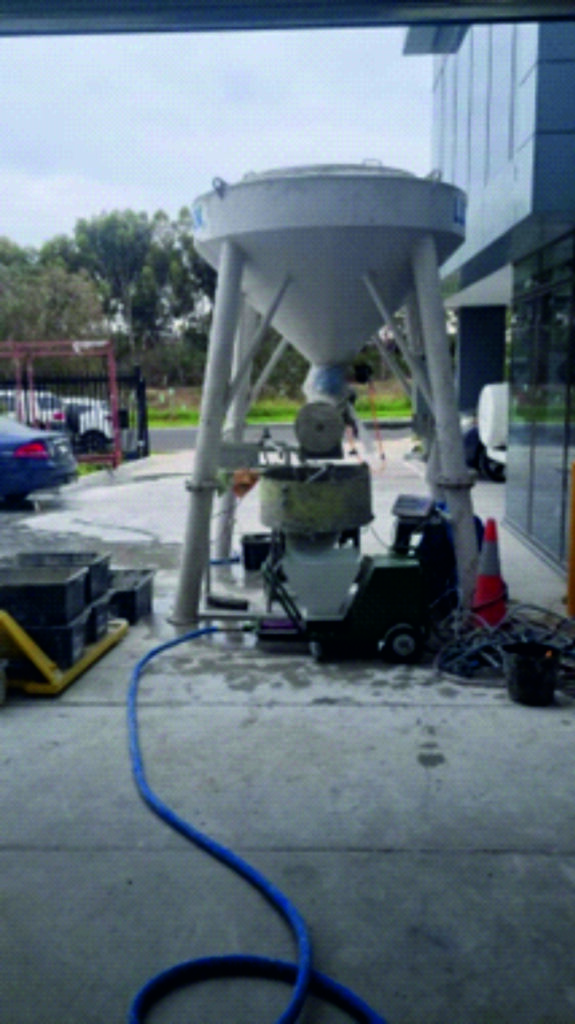
With automated printing systems capable of constructing residential structures in a fraction of conventional timelines, the technology has the potential to transform housing accessibility while reducing material consumption and environmental impact simultaneously.
Dr. Ranganathan’s leadership combines technical expertise with extensive corporate experience gained through senior roles at IBM and Fujitsu Australia. His background in engineering and mechatronics has shaped 3VIMA’s approach to integrating digital intelligence, robotics, and sustainable construction into a commercially viable ecosystem.
Today, as countries worldwide intensify their focus on climate resilience and sustainable infrastructure, 3VIMA represents a powerful example of how technological innovation can redefine traditional industries. Through its commitment to low-carbon materials, 3D concrete printing, and next-generation geopolymer research, the company is helping shape a future where construction becomes faster, smarter, and significantly greener.
In an era where environmental responsibility is no longer optional, 3VIMA Pty Ltd is demonstrating that the future of construction may not only be built differently it may be printed sustainably from the ground up.
For more info :
3vima.construction