At HANNOVER MESSE 2026, innovation in industrial engineering continues to push boundaries, with a notable breakthrough addressing one of the most persistent challenges in harsh operating environments dust exposure. A recent development highlights how advanced material engineering is transforming the reliability and efficiency of large-scale 3D printing systems used in construction.
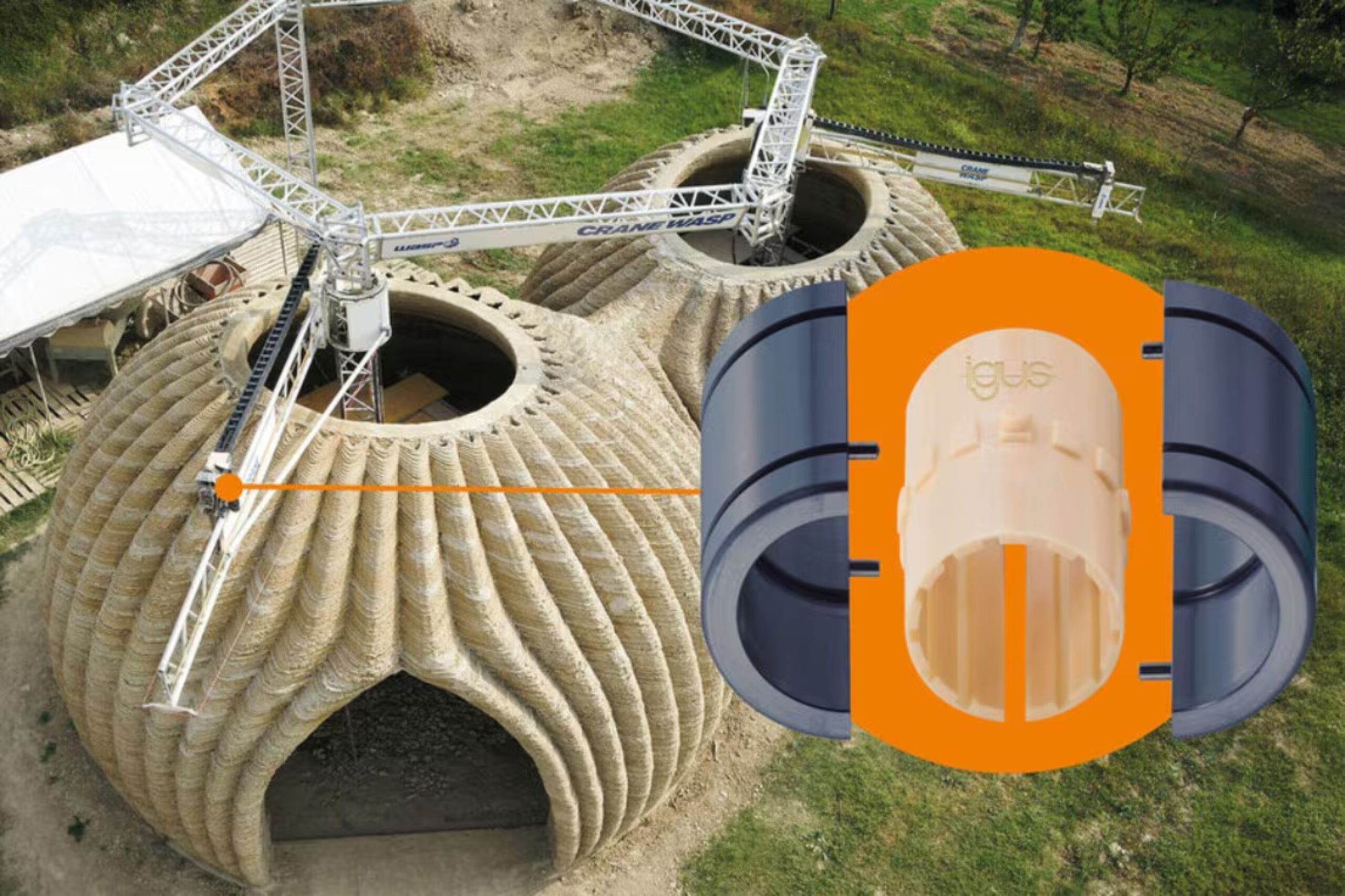
Italian manufacturer WASP, known for its pioneering work in 3D-printed housing, has adopted a novel approach to ensure uninterrupted machine performance. Its large-format 3D printers, designed to build homes using natural materials such as clay, operate continuously for extended periods under demanding environmental conditions. These systems are particularly vulnerable to dust and debris, which can compromise critical moving components and lead to increased wear, friction, and eventual failure.
To address this, WASP has integrated lubrication-free sliding elements made from high-performance polymers developed by igus. These components, based on iglidur® J material, contain embedded solid lubricants that are released gradually during operation. This eliminates the need for external grease while ensuring smooth and consistent motion even in dust-heavy environments.
The implications of this innovation are significant. Traditional metal bearings rely on lubrication films that can be disrupted by dust particles, leading to abrasion and system degradation. In contrast, the polymer-based sliding films are inherently resistant to contamination, enabling reliable, maintenance-free operation over long durations.
Another key advantage lies in weight reduction. These polymer components are substantially lighter than their metal counterparts by as much as 80 percent resulting in improved responsiveness and precision of the print head. This directly enhances the quality of printed structures, a crucial factor in construction-scale additive manufacturing.
Beyond durability and performance, the technology also contributes to operational efficiency. By eliminating the need for regular lubrication, maintenance intervals are reduced, lowering both downtime and total cost of ownership. Additionally, the materials demonstrate resilience against moisture and temperature fluctuations, ensuring consistent performance across varying environmental conditions.
The application of such advanced materials underscores a broader trend within the industrial sector shifting from traditional mechanical solutions to smart, self-lubricating systems that combine durability with sustainability. As additive manufacturing continues to scale in construction and other industries, these innovations will play a pivotal role in ensuring reliability under real-world conditions.
As showcased at HANNOVER MESSE, the collaboration between WASP and igus exemplifies how material science and engineering ingenuity can solve practical challenges in modern manufacturing. With industries increasingly demanding continuous, maintenance-free operations, dust-resistant technologies like these are set to become a cornerstone of next-generation industrial systems.
For More Info :
www.igus.eu