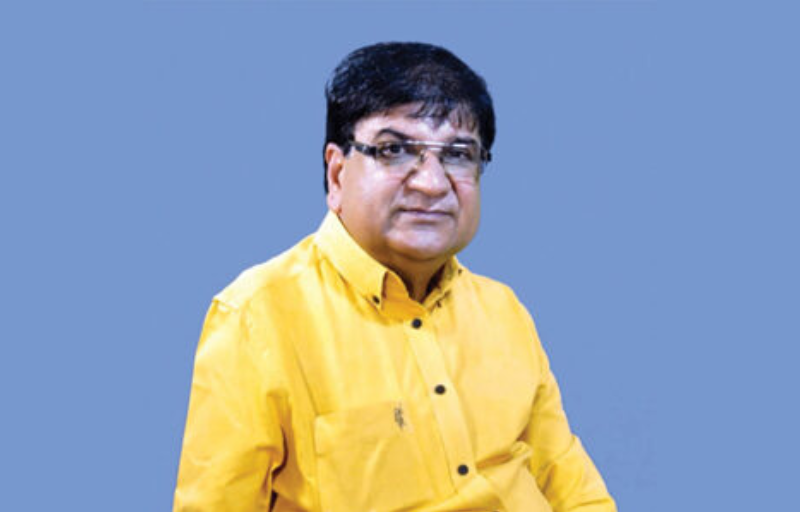
Dr. D. P. Sharma
As Artificial Intelligence (AI) reshapes global industries, India stands at a pivotal moment in its economic and social evolution. While AI promises to accelerate innovation and productivity, it also poses deep challenges to the country’s labour landscape — particularly among rural and unorganized sector workers. In this compelling piece, Prof. Dr. D.P. Sharma, an internationally renowned digital diplomat and ILO consultant, explores the double-edged nature of AI and lays out a roadmap to ensure India’s transition into an AI-driven future remains inclusive, equitable, and worker-centric.
Artificial Intelligence is no longer a distant dream; it is a defining reality of India’s current labour ecosystem. Across sectors — from healthcare to manufacturing, customer service to logistics — AI is already transforming how work is done. Yet, as technology advances, the shadow of automation looms large over millions of traditional jobs, especially in India’s vast and vulnerable unorganized sector, which employs over 80% of the country’s workforce.
According to the World Economic Forum’s 2023 report, AI could disrupt nearly 69 million jobs in India by 2027, with roles in manufacturing, data entry, and IT-BPO services most at risk. At the same time, AI is projected to create nearly 97 million new jobs in emerging fields such as data science, cybersecurity, green technology, and health tech. This paradox presents a critical question: Is India’s workforce prepared for this dramatic shift?
The Indian government has taken significant steps toward AI adoption. Initiatives like the National AI Strategy, Skill India Mission, PMKVY, and FutureSkills Prime are aimed at skilling the youth for a digital future. The National Education Policy (2020) also emphasizes early exposure to programming and AI. However, these initiatives predominantly reach urban and tech-savvy populations. The rural and informal workforce — which makes up 83% of India’s labour force — remains largely untouched.
Another structural issue lies in the enduring preference for public sector jobs, which continues to skew policy attention and economic benefits towards government employees. This leaves a large segment of private sector workers, farmers, and daily wage earners inadequately supported, despite their indispensable contribution to national growth. As Dr. Sharma emphasizes, “In the AI age, the private sector workforce must be seen as an asset to nurture, not a liability to manage.”
In light of these gaps, the International Labour Organization (ILO) proposes a worker-centric approach to AI, centered on fair wages, social protection, and ethical use of automation. Key recommendations include:
- Guaranteeing universal labour rights, including job security and social benefits.
- Promoting lifelong learning to help workers continuously adapt.
- Implementing ethical AI frameworks to prevent exploitation and bias.
The solution lies in forging strong public-private partnerships. Industry and government must collaborate to co-create scalable skilling ecosystems, ensure ethical AI adoption, and expand the reach of social security measures. Embedding the ILO’s ethical standards into national policy can make technological progress sustainable and humane.
Dr. Sharma warns that India faces a stark choice. One path leads to a future defined by empowered workers, inclusive growth, and social harmony. The other leads to widespread displacement, rising inequality, and social unrest. The time for decisive action is now.
AI must not become a force that widens societal divides; rather, it must serve as a catalyst for unity, opportunity, and equitable growth. To truly live up to the ethos of “Sabka Saath, Sabka Vikas, Sabka Vishwas”, India must prioritize adaptive skilling, digital inclusion, and worker dignity as it strides into the AI era.